Test Your Sump Pump
Key takeaways
Dirt and debris can clog your sump pump and cause it to leak. A wet basement can lead to costly water damage repairs and unhealthy indoor air. By performing a simple test, you can keep the air inside your home healthy, avoid potential water damage, and identify potential issues before they become more costly problems.
- Testing your sump pump is simple and should be done every year – more often if your basement gets a lot of groundwater.
- When your sump pump breaks down, the water damage can cause rust, rot, and mold.
What you need
Gloves
Face mask
5-gallon bucket
Safety First
Make sure your face mask fits snugly over your nose and mouth before starting this work.
Now you know
A wet basement can cause all sorts of problems like rust, rot, mold and unhealthy indoor air.
Many experts recommend home buyers check out the basement first. If significant water issues are evident, walk away before you fall in love.
Sump pump high water alarms send out an alert, AFTER water is rising toward your basement/.
Follow these steps to test your sump pump
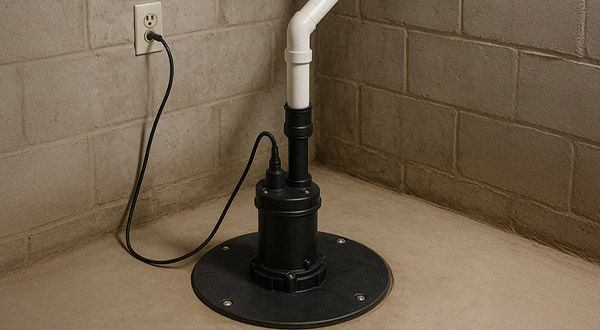
- Locate pipe. Locate the exit pipe, which drains water from the pump outside.
- Clear debris. Check to make sure it is clear of dirt and debris, and that it directs the water well away from the foundation.
- Trace the two electrical cords of the pump. The pump plug is plugged into the float cord plug, which is in the outlet.
- Unplug both. Then re-plug the pump plug directly into the outlet.
- Listen. You should hear a humming sound, meaning the pump is working.
- Reconnect cords. Re-plug both cords as they were originally.
- Test pump. If you have a single corded pump, pour the bucket full of water slowly into the pump until the float rises.
- Monitor. The pump should turn itself on to remove the water.
- Check it works. If neither testing method works, your pump should be serviced by a professional.